
WHY IS IT SO HARD TO CHANGE?
Aug 21, 2026
Does Your Mind Control Your Body?
Or Does Your Body Control Your Mind?
Why is it so hard to change?
You know you have outgrown your job.
You have spent months thinking about whether you should stay, ask for a promotion, change companies, or finally pursue work that feels more meaningful.
Then Sunday night arrives.
You open your laptop.
You think about Monday morning’s meetings, the presentation you still need to finish, and the manager whose approval seems to matter more than you want it to.
Your chest tightens.
You tell yourself:
“Maybe I should just be grateful for what I have.”
So you stay.
Or maybe it happens in your relationship.
You promise yourself that the next time something bothers you, you will speak up instead of keeping the peace.
Then your partner says something that disappoints you.
You feel the tension in your stomach.
You start wondering whether saying something will create conflict.
So you smile, say, “It’s fine,” and repeat the same pattern you wanted to change.
You know what you want to do differently.
But something inside you keeps pulling you back toward what feels familiar.
Why?
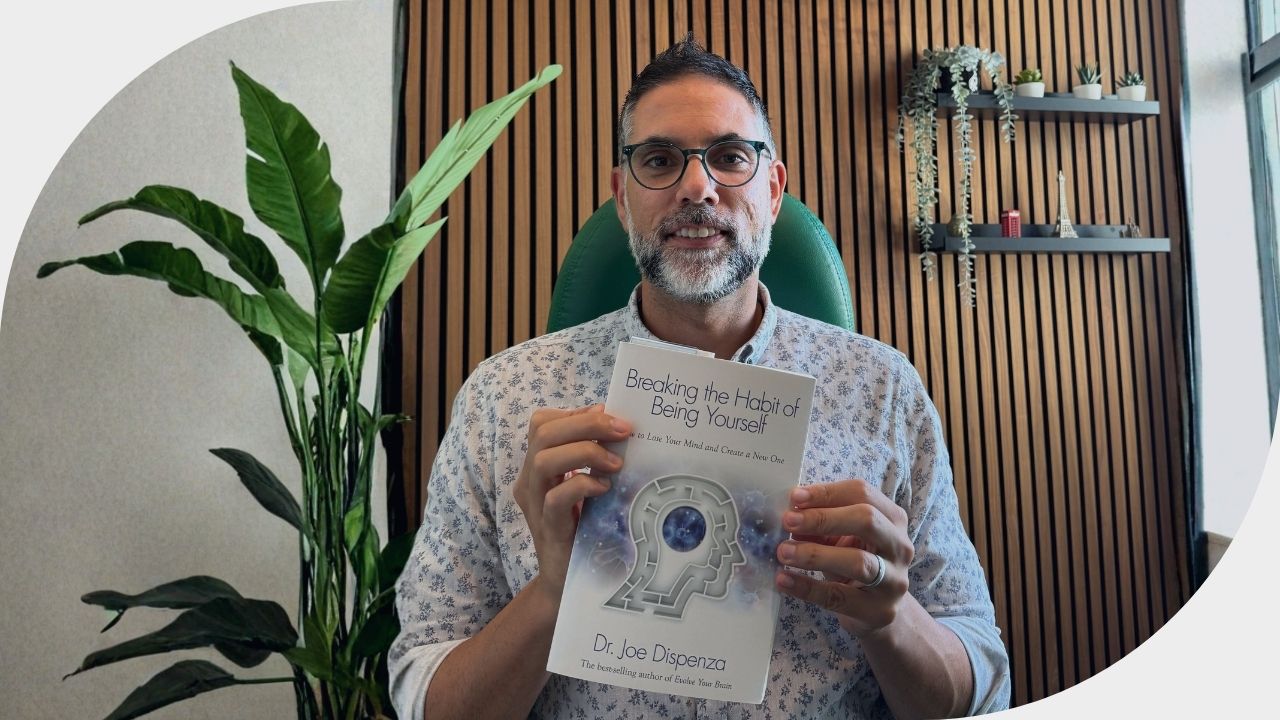
This question sits at the heart of Joe Dispenza’s Breaking the Habit of Being Yourself.
And his explanation raises an even more fascinating question:
What if your conscious mind is not always the one making the decision?
It Starts Before You Notice It

Imagine you are sitting in a mid-year performance review.
Your manager says:
“You’re doing great work, but I’d like to see you become more visible with senior leadership.”
That is all they say.
But within seconds, your mind starts moving.
They don’t think I’m leadership material.
Maybe I’m falling behind.
I should be further along by now.
Then you remember your colleague who was promoted last quarter.
You think about the LinkedIn announcement from a former classmate who just became a VP.
Your breathing changes.
Your shoulders tighten.
You feel that familiar heaviness in your stomach.
A thought created a feeling.
But now something interesting happens.
Once you feel insecure, your mind starts producing more thoughts that match the insecurity.
You remember the presentation where you stumbled over an answer 6 months ago.
You think about the meeting where your idea was overlooked.
You start questioning whether you chose the right career at all.
What began as one piece of feedback has become an entire story about your future.
Dispenza describes this as a Feedback Loop between the brain and body.
First, you begin to feel the way you think.
Then you begin to think the way you feel.
And that is where the relationship between mind and body becomes much more interesting.
When Your Body Knows the Routine

Think about your commute to work.
You have probably arrived at the office at least once and barely remembered parts of the drive.
You changed lanes.
Stopped at lights.
Took the correct exit.
Parked.
Your conscious attention was somewhere else, yet your body knew exactly what to do.
Repetition made the behavior automatic.
Dispenza argues that something similar can happen with your emotional responses.
Imagine spending years working in environments where mistakes were heavily criticized.
You learn to triple-check every email.
You rehearse presentations repeatedly.
You avoid sharing an idea until you are certain it is polished.
At first, these may have been conscious strategies.
Over time, however, perfectionism becomes automatic.
Now you join a healthier company with a supportive manager.
Nobody is attacking you.
Nobody expects perfection.
Yet before presenting an unfinished idea, you still feel uncomfortable.
Your current environment has changed.
But your internal response has not caught up yet.
The situation is new.
The feeling is old.
What Happens Around 35?

This is one of the ideas in Dispenza’s book that made me stop and reflect.
He argues that by our mid-30s, many of our behaviors, beliefs, attitudes, emotional reactions, habits, conditioned responses, and perceptions have been rehearsed so often that much of our personality operates automatically.
Whether you interpret his exact age and percentages literally or conceptually, the underlying question is worth considering.
By 35, you have had roughly 20 years of adult life to practice being you.
Think about what you may have practiced during those years.
At 23, you learned that saying yes to everything earned praise from your manager.
At 26, you learned that working late helped you get promoted.
At 29, you learned to compare your career with friends who seemed further ahead.
At 31, you stayed in a relationship longer than you wanted because disappointing someone felt worse than disappointing yourself.
At 33, you started questioning whether your career still reflected who you were becoming.
At 35, you may find yourself successful on paper, yet wondering:
“Why doesn’t this life feel as fulfilling as I thought it would?”
None of these experiences exists in isolation.
They become part of how you interpret yourself and the world around you.
And repetition can slowly turn an experience into an identity.
You stop saying:
“I worry about disappointing people.”
You say:
“I’m a people-pleaser.”
You stop saying:
“I’m uncertain about my next career move.”
You say:
“I have no idea what I want.”
You stop saying:
“I feel insecure when I’m compared with others.”
You say:
“I’m not confident.”
Something you repeatedly experience eventually becomes something you believe you are.
That distinction matters.
Familiar Doesn’t Mean Aligned

This is where many mid-career professionals find themselves stuck.
Imagine you have spent 12 years climbing the corporate ladder.
You are respected.
Your compensation is strong.
Your resume looks impressive.
But somewhere along the way, the work stopped feeling meaningful.
You start imagining a different career.
Maybe something more creative.
Maybe leadership.
Maybe entrepreneurship.
Maybe work that gives you more freedom.
The thought energizes you.
Then you open LinkedIn and see the title you would be giving up.
You think about your salary.
You imagine explaining the change to your parents or colleagues.
Your stomach tightens.
Suddenly staying feels safer.
Does that mean staying is the better decision?
Not necessarily.
It may simply mean staying is more familiar.
We often interpret familiar as safe, correct, or “me.”
But familiar and aligned are not the same thing.
Sometimes the path that reflects who you are becoming feels uncomfortable precisely because you have never practiced being that person before.
Why Knowing Better Doesn’t Change You
This also explains one of the biggest frustrations I see among intelligent, self-aware professionals.
You understand the problem.
You can explain it beautifully.
But you still repeat it.

You know you should establish boundaries with your manager.
Then a 6:30 p.m. message arrives asking whether you can finish something tonight.
You were planning dinner with your spouse.
You look at the message.
Your body becomes tense.
You imagine your manager questioning your commitment.
So you type:
“Absolutely, no problem.”
You know intellectually that one boundary will not destroy your career.
But your emotional response says otherwise.
Or perhaps you know that your relationship needs a difficult conversation.
You have rehearsed exactly what you want to say.
Then your partner sits across from you.
You feel the discomfort.
And instead of saying what you actually need, you soften it until your real message disappears.
Knowledge was present.
But so was conditioning.
Dispenza argues that this is one reason positive thinking by itself may not create lasting change. Your conscious mind can want one thing while your body remains familiar with another emotional state.
Your mind says:
“I want the promotion.”
Your body remembers what visibility feels like when you fear judgment.
Your mind says:
“I want a healthier relationship.”
Your body associates honesty with conflict.
Your mind says:
“I want a meaningful career.”
Your body associates uncertainty with danger.
You are not simply changing a thought.
You are asking your entire system to experience something unfamiliar.
Are You Responding to Today?

Imagine walking into an interview for a role you genuinely want.
The hiring manager asks:
“Tell me about a time you failed.”
Suddenly your mind goes blank.
Your heart beats faster.
You start talking too quickly.
Why?
Perhaps 3 years earlier, another interviewer challenged your answer and made you feel embarrassed.
That interview ended badly.
You remember the experience not only as information, but emotionally.
Now the person sitting across from you is different.
The company is different.
You are more experienced.
The moment is new.
Yet your body recognizes something familiar.
Dispenza describes emotions as closely connected to past experiences and argues that repeatedly revisiting emotionally charged experiences can reproduce aspects of those emotional states in the present.
That leads to a powerful question:
Are you responding to what is actually happening right now?
Or are you responding to what this moment reminds you of?
Your manager is not your former manager.
Your current partner is not your former partner.
This interview is not your previous interview.
This career decision is not the decision you made 10 years ago.
But when an old feeling appears, your mind can begin interpreting the present through the past.
The Loop Becomes Your Life
This is where I connect Dispenza’s ideas with my own Holistic Wellness Philosophy.
Your career, relationships, thoughts, emotions, and physical responses do not exist in separate boxes.
They influence one another.
Consider someone who believes:
“I have to prove my value.”
That belief may lead them to work longer hours.
Longer hours create chronic stress.
Stress makes them more reactive at home.
Their relationship becomes strained.
They feel guilty.
So they work even harder to feel successful somewhere.
The cycle reinforces itself.
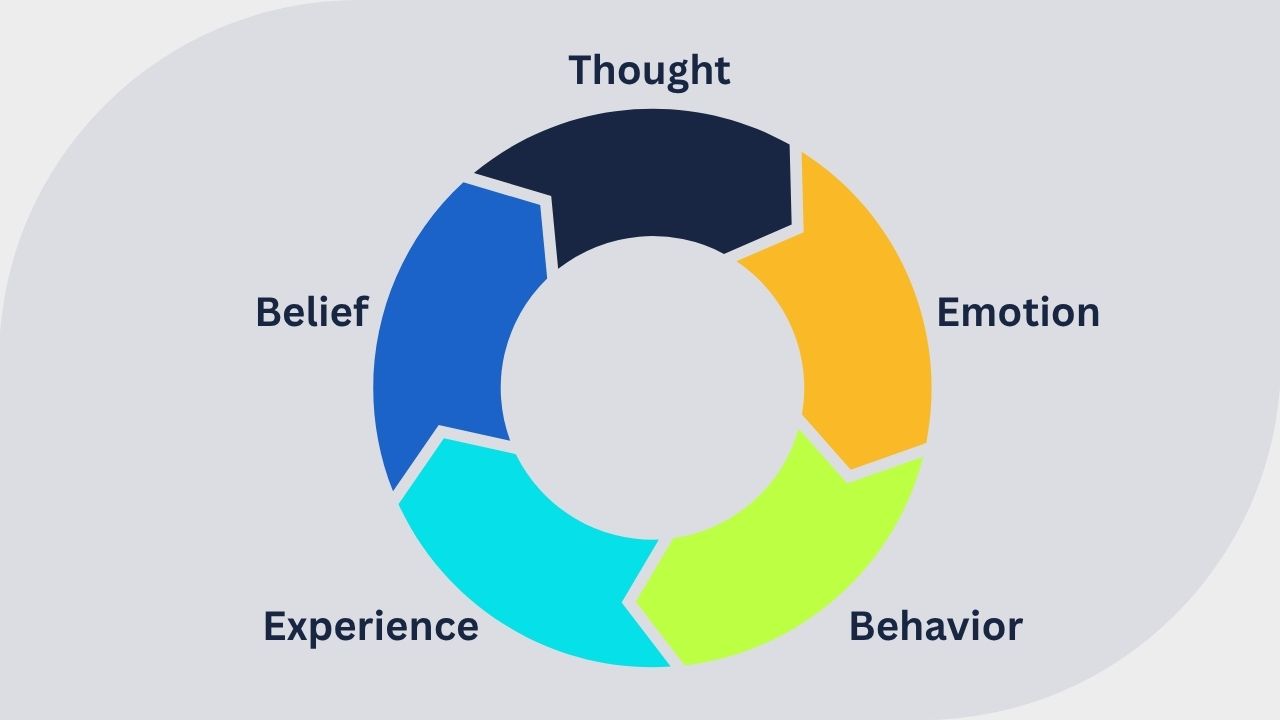
Thought → Emotion → Behavior → Experience → Belief → Thought
After enough repetition, the pattern feels like life simply “happening.”
But the moment you can see the pattern, something changes.
Awareness Interrupts the Loop
This is why I believe meaningful change begins with awareness.
Not judgment.
Not forcing yourself to feel differently.
Not repeating affirmations you do not believe.
Awareness.
The next time your manager sends you a vague message saying:
“Can we talk tomorrow?”
notice what happens before you immediately assume something is wrong.

When your partner becomes quiet, notice what story your mind creates before deciding they are upset with you.
When you see a former colleague announce another promotion, notice the feeling that appears before concluding that you are behind in life.
Pause and ask:
What am I actually feeling?
Then:
Where do I feel it in my body?
What thought appeared first?
What does this situation remind me of?
And perhaps most importantly:
Is my response coming from what is happening now, or from something familiar?
That moment of observation creates space between the trigger and your response.
And inside that space is something habit does not have:
Choice.
Start With the Emotion
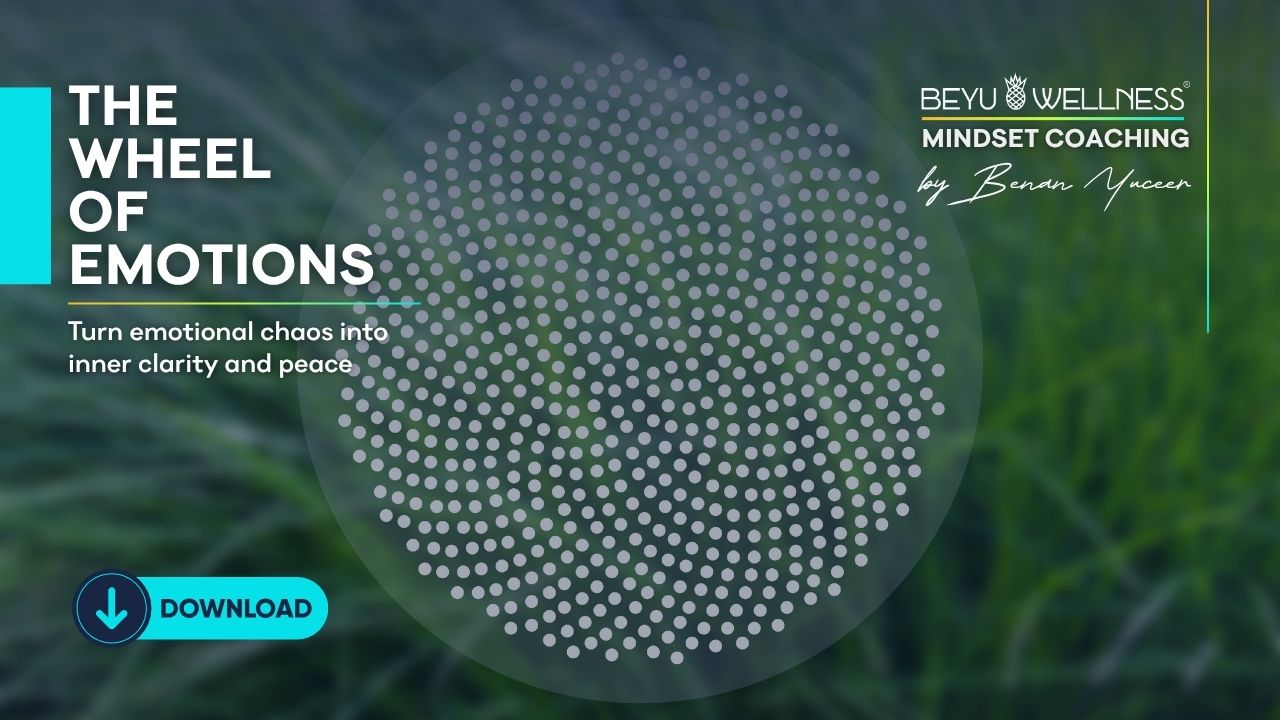
This is why I created my Wheel of Emotions.
Because most of us are better at analyzing our problems than identifying what we actually feel.
You say:
“Work is stressing me out.”
But underneath the stress may be fear that your career has stalled.
You say:
“I’m frustrated with my partner.”
But underneath the frustration may be feeling unseen.
You say:
“I don’t know what I want to do next.”
But underneath the confusion may be fear of making a choice you cannot undo.
Naming the emotion does not solve everything.
But it gives you a place to begin.
The next time you notice yourself reacting automatically, use the Wheel of Emotions and ask:
“What am I actually feeling?”
Then ask:
“What might this feeling be trying to show me?”
You do not have to immediately fix it.
First, see it.
[Download the Free Wheel of Emotions]
So, Who Is Really in Control?
Does your mind control your body?
Or does your body control your mind?
Probably both.
Your thoughts influence how you feel.
Your feelings influence what you think.
And after years of repetition, the conversation can become so automatic that you forget there is a conversation happening at all.
But familiar does not mean permanent.
The professional who spent 15 years proving their worth can learn to define success differently.
The person who avoided conflict can learn to communicate honestly.
The high achiever who followed the expected career path can decide what meaningful work means now.
The person you practiced being throughout your 20s and 30s does not have to dictate who you become next.
So the next time you catch yourself saying:
“Why do I keep doing this?”
Try asking a better question:
“What have I practiced for so long that it now feels like who I am?”
Because once you become aware of the pattern, you are no longer simply repeating it.
You can decide what you want to practice next.
Got Questions?
I'd love to hear from you! Ask away, and let’s explore the answers together.

