
THE ODYSSEY WAS NEVER ABOUT GETTING HOME
Jul 30, 2026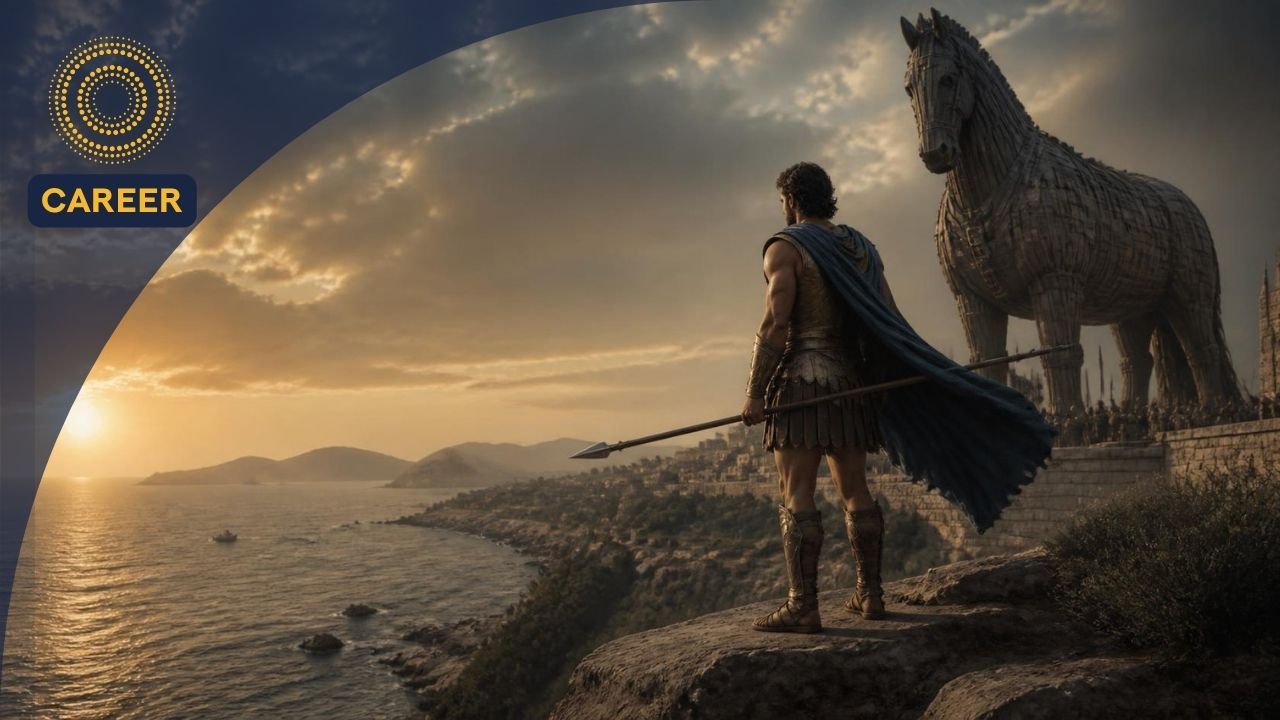
It's About Coming Home to Your Values
What Homer's timeless epic reveals about identity, values, and the journey back to who you truly are.
Why This Story Still Matters
When I first read Homer's The Odyssey as an English Literature student in my early twenties, I was captivated by the adventure.
Like millions of readers before me, I admired Odysseus for his courage, intelligence, and resilience. Here was a man who outsmarted the Cyclops, resisted the Sirens, survived impossible storms, and spent 10 years trying to return home after the Trojan War.
Back then, I thought it was one of the greatest adventure stories ever written.
Today, I believe it's one of the greatest stories ever written about identity.
That realization didn't come from another literature class. It came from life.
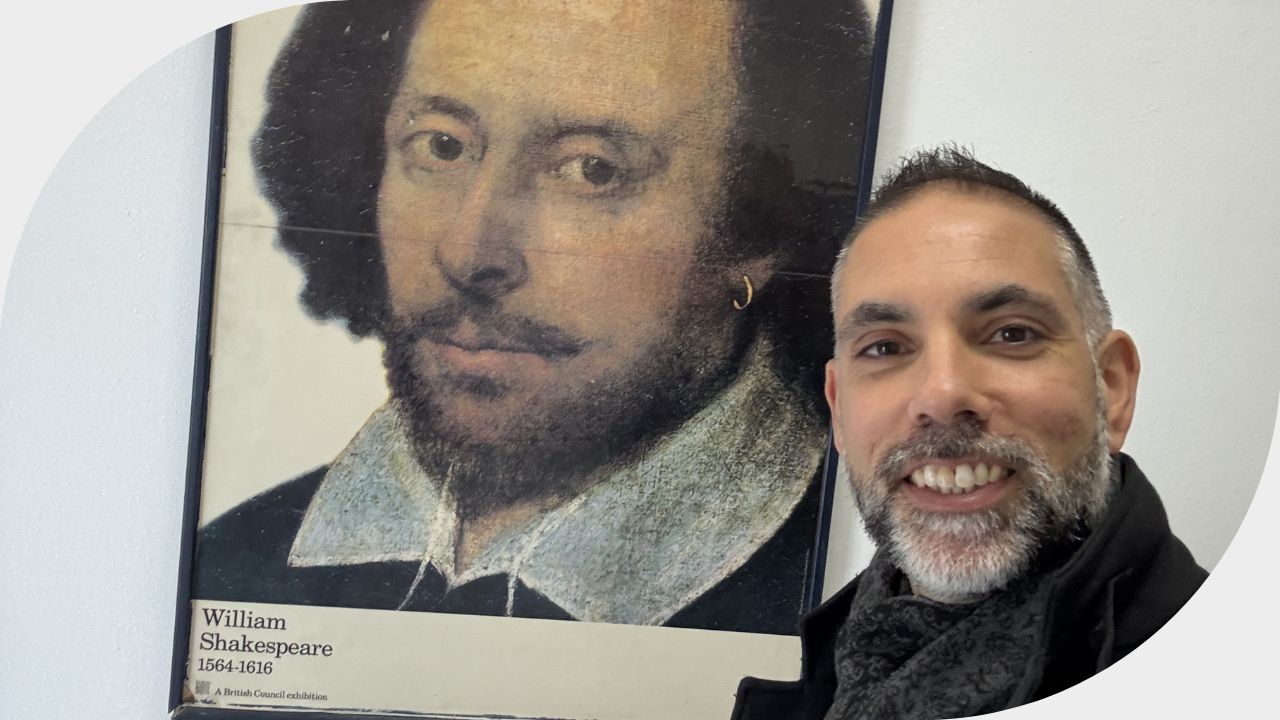
Years after graduating, I found myself in the middle of my own storm. From the outside, I looked successful. I had built a career in Corporate America, achieved the goals I had worked so hard for, and checked many of the boxes society tells us should lead to happiness.
Yet internally, something felt off.
I found myself asking questions I had never slowed down enough to ask before.
Who am I beyond my career?
What do I truly value?
Am I building a life that feels meaningful, or one that simply looks successful?
Looking back, I wasn't experiencing a career crisis.
I was experiencing an identity crisis.
That season completely changed the direction of my life. It led me to study psychology, neuroscience, nutrition, NLP, and holistic wellness. More importantly, it forced me to stop looking outward for answers and start looking inward.
I wasn't trying to become someone new.
I was trying to remember who I had always been before achievement, expectations, and fear slowly pulled me away from myself.
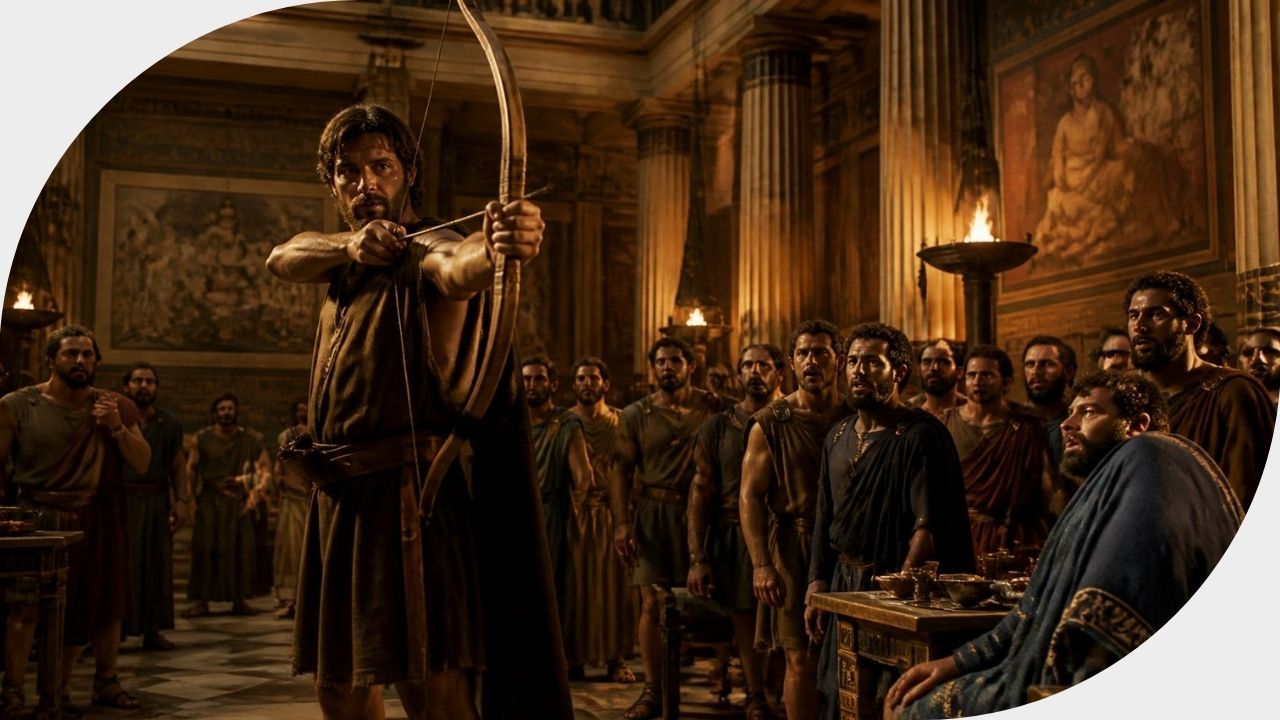
Recently, after watching Christopher Nolan's adaptation of The Odyssey, I found myself reflecting on the deep literary discussions we had in college. This time, however, I wasn't watching the film through the eyes of a literature student.
I was watching it as someone who had experienced his own journey home.
That's when everything clicked.
Most people believe The Odyssey is about a man trying to return to Ithaca.
I don't.
I believe it's about a man trying to return to himself.
That's why this story has remained relevant for nearly 3,000 years.
Because sooner or later, every one of us finds ourselves asking the same question:
Who am I when everything I've built no longer tells me who I am?
The Real Battle Was Never Troy
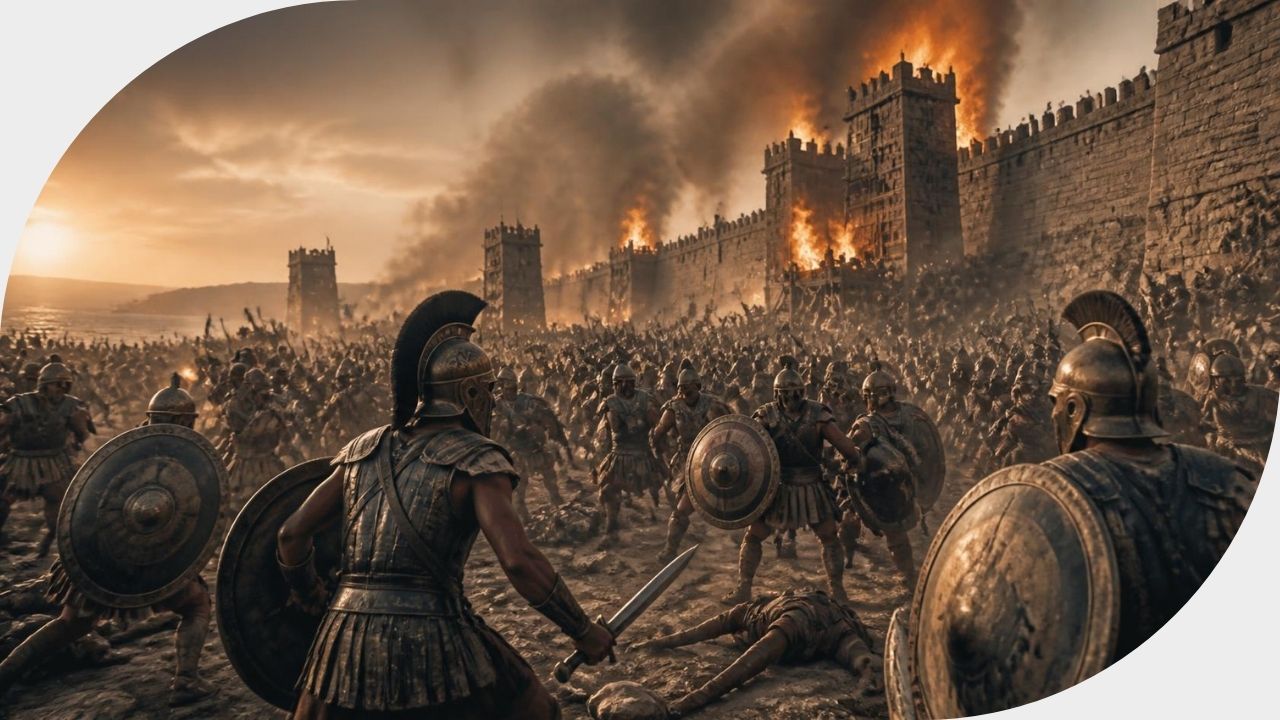
To understand The Odyssey, we have to begin before Odysseus ever sets sail.
For 10 years, he fights alongside King Agamemnon in the Trojan War. History remembers him as the brilliant strategist behind the Trojan Horse, one of the most ingenious military tactics ever conceived.
His intelligence wins the war.
It earns him glory.
It secures his place in history.
But Christopher Nolan's interpretation introduces a fascinating perspective.
Instead of celebrating the victory, he asks what comes after it.
What happens when the applause fades?
What happens when a man is left alone with his own conscience?
Rather than portraying Odysseus as an untouchable hero, Nolan presents him as someone burdened by guilt. A man who begins questioning whether his greatest achievement was also his greatest mistake.
The Trojan Horse didn't just end a war.
It also contributed to the destruction of an entire city and the deaths of countless innocent people.
Suddenly, intelligence no longer feels like a gift.
It feels like a burden.
Whether Homer intended this interpretation or not, I think it reveals one of the deepest truths about being human.
We don't lose ourselves overnight.
We lose ourselves one compromise at a time.
We say yes when our values are quietly telling us no.
We chase recognition instead of fulfillment.
We pursue success without asking whether success aligns with who we truly want to become.
Then one day we wake up and ask,
"How did I get here?"
As a Holistic Wellness Practitioner, I've noticed that many people who feel stuck aren't lacking motivation or talent.
They're disconnected from their values.
When you don't know what truly matters to you, it's easy to spend years climbing a mountain you never wanted to climb.
I think that's where Odysseus' real journey begins.
Not on the sea.
But within himself.
The storms that follow aren't simply delaying his return to Ithaca.
They're giving him the opportunity to become the man who deserves to return.
Perhaps that's what life's biggest challenges are doing for us, too.
8 Timeless Symbols That Still Speak to Us
1. The Journey Home
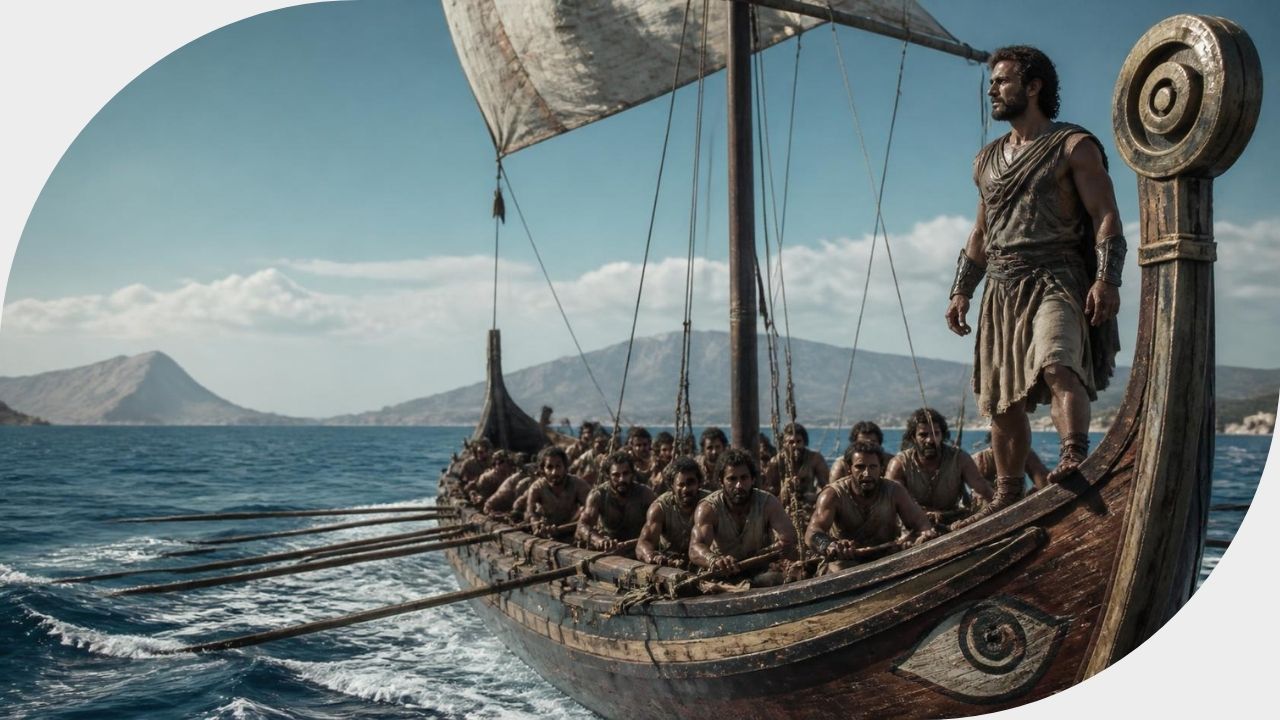
The title of the epic gives us the first clue.
Odysseus isn't simply trying to return to a place.
He's trying to return to a life that reflects who he truly is.
For years, I believed "home" meant reaching the next milestone.
The next promotion.
The next accomplishment.
The next version of success.
But every time I reached one destination, another quickly appeared.
The finish line kept moving.
It wasn't until my own identity crisis that I realized I had been searching in the wrong direction.
Home isn't a destination.
It's a feeling.
It's what life feels like when your choices align with your values.
When you stop performing for everyone else and start living authentically.
Maybe that's why Odysseus' journey takes 10 years.
Because coming home to yourself is rarely a straight line.
It requires letting go of identities that no longer fit.
It asks you to question old definitions of success.
It invites you to become less concerned with who the world expects you to be and more committed to who you truly are.
Home isn't a place you arrive at. It's what life feels like when your choices align with your values.
2. The Sea
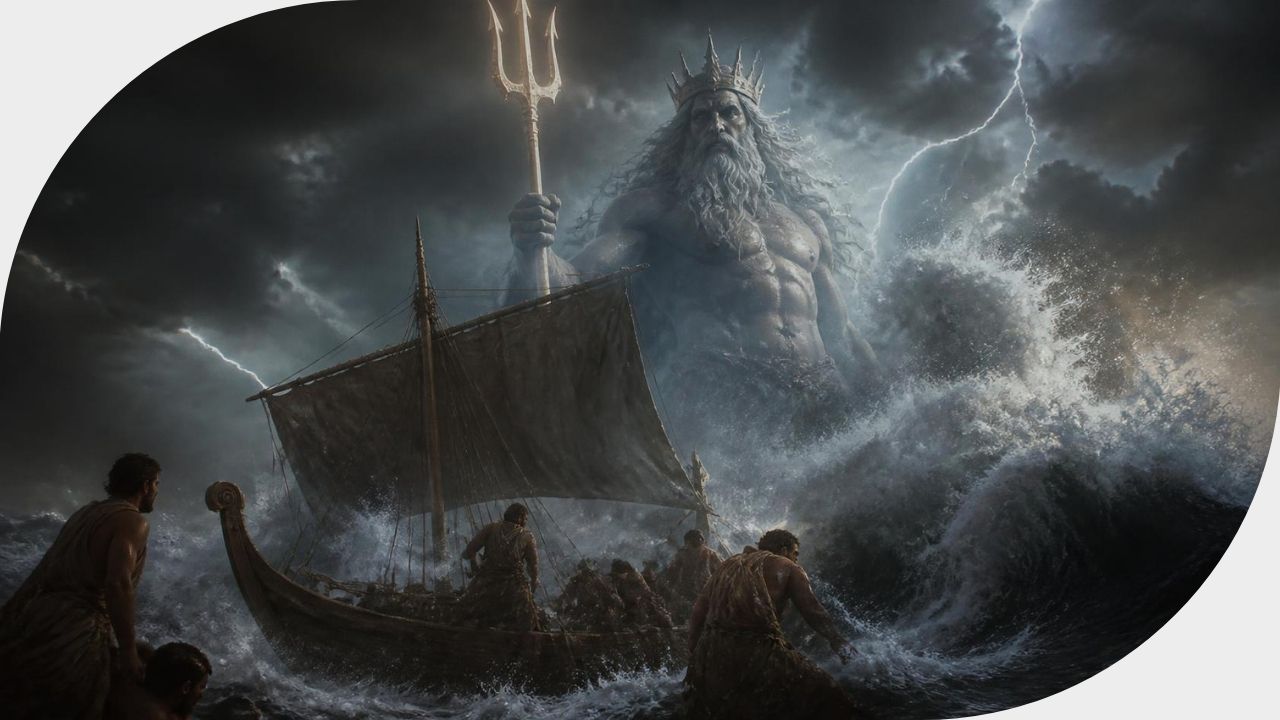
The sea is far more than the setting of the story.
It symbolizes uncertainty.
One day it's calm.
The next it's violent.
Life works the same way.
No matter how carefully we plan, there will always be storms we didn't see coming.
A layoff.
A health challenge.
A divorce.
The loss of someone we love.
The more experience I gain in life, the more I believe uncertainty isn't something to fear.
It's something to learn from.
When I was navigating my own identity crisis, I desperately wanted certainty.
Instead, life gave me questions.
Looking back, I'm grateful it did.
Because certainty would have changed my circumstances.
Uncertainty changed me.
The sea doesn't simply delay Odysseus' journey.
It transforms him.
Every storm teaches patience.
Every setback builds resilience.
Every unexpected detour strips away another layer of ego.
By the time he reaches Ithaca, he isn't the same man who left for Troy.
Perhaps that's true for all of us.
The goal isn't to avoid life's storms.
It's to allow them to shape us into wiser, more authentic versions of ourselves.
Stop asking, "Why is this happening to me?" Start asking, "Who is this experience helping me become?"
3. Argos
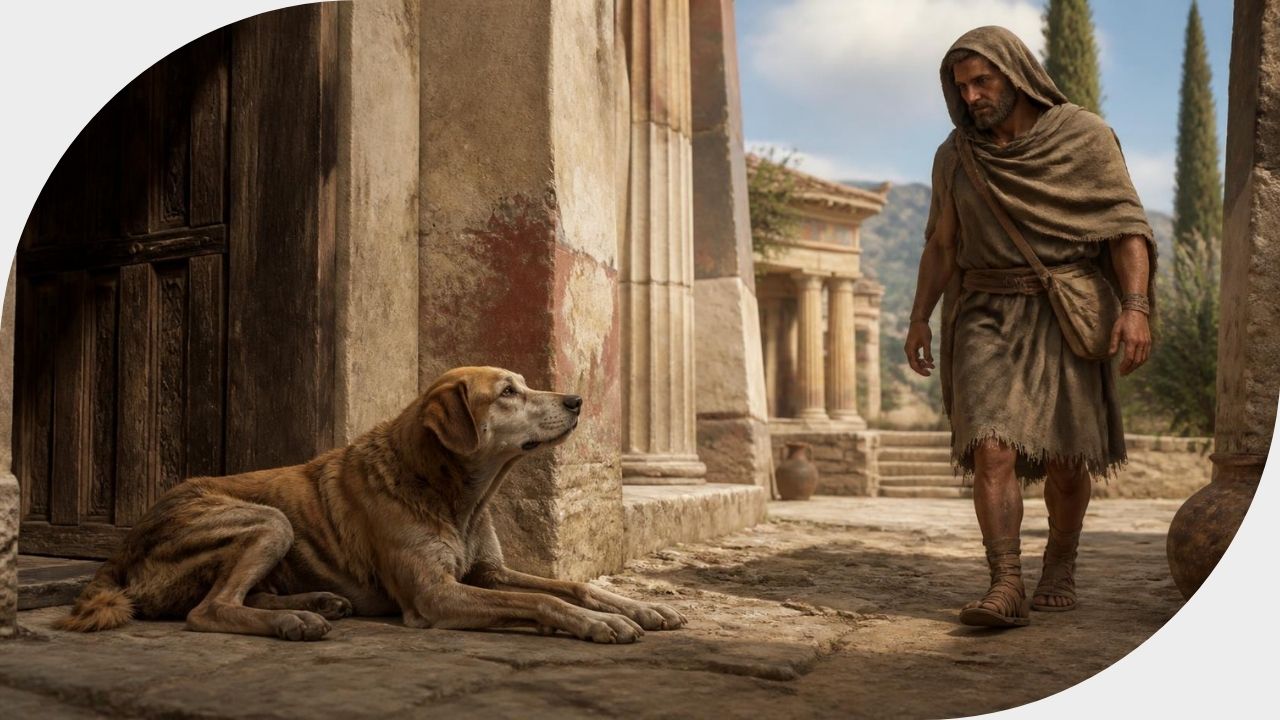
Few scenes in literature are as emotionally powerful as Odysseus' reunion with Argos.
After 20 away, Odysseus finally returns to Ithaca disguised as a beggar.
No one recognizes him.
Not his neighbors.
Not his servants.
Not even the people who once knew him best.
Then Homer introduces Argos.
Old.
Weak.
Neglected.
The moment the faithful dog sees Odysseus, he recognizes his master instantly.
He lifts his head, gently wags his tail, and peacefully dies, knowing his long wait is finally over.
I've often wondered why Homer included this seemingly small moment.
I think it's because Argos represents something each of us carries within.
The part of ourselves that never forgets who we really are.
Life covers that part with expectations, responsibilities, disappointments, titles, and fear.
But it never disappears.
That's why I don't believe your authentic identity can ever truly be lost.
It can be buried.
Ignored.
Forgotten.
But it's always waiting patiently for you to remember it.
Just like Argos waited for Odysseus.
Your authentic self isn't lost. It's patiently waiting beneath the expectations you've accumulated over the years.
4. The Cyclops
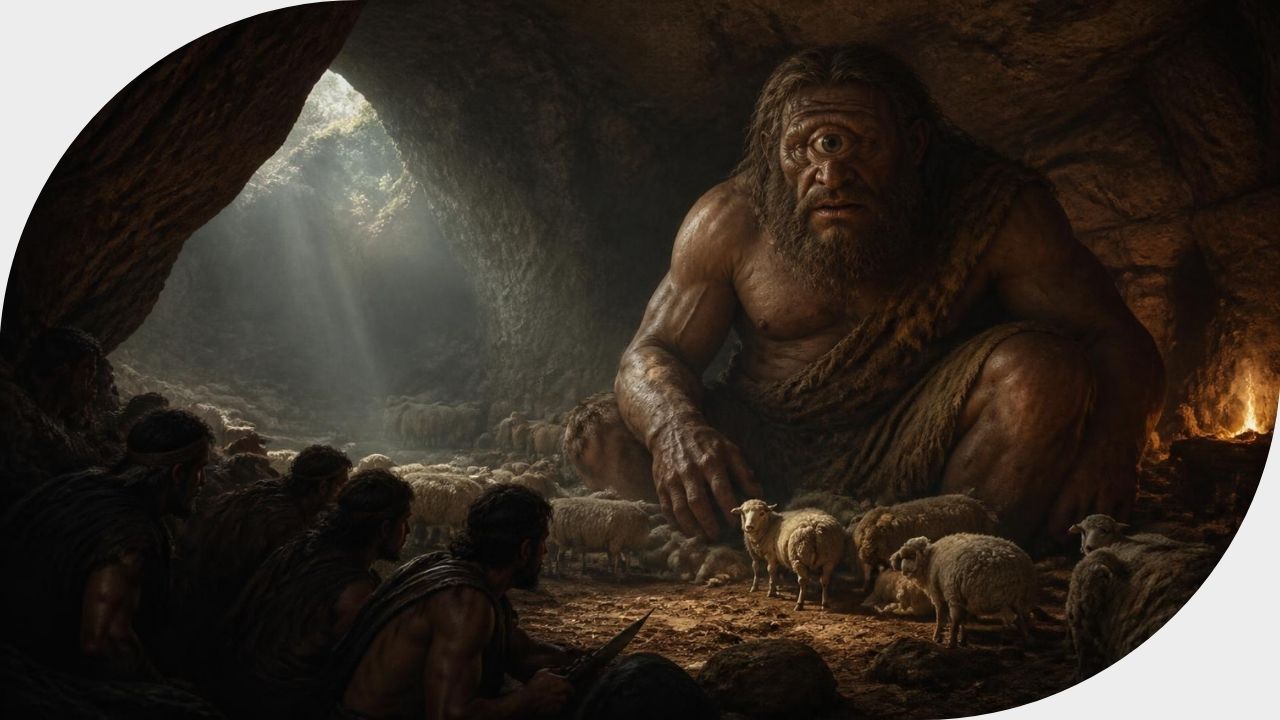
Most people remember the Cyclops because of Odysseus' brilliant escape.
He introduces himself as "Nobody," blinds Polyphemus, and escapes hidden beneath the sheep.
It's one of the greatest displays of strategic thinking in literature.
But the real lesson begins after the escape.
As his ship sails away, Odysseus can't resist revealing his true identity.
He shouts his name across the sea, wanting the Cyclops to know exactly who defeated him.
That single decision changes everything.
Polyphemus calls upon Poseidon, who curses Odysseus' journey home.
Years of unnecessary suffering follow.
Not because Odysseus lacked intelligence.
Because his ego needed recognition.
I think this lesson is even more relevant today than it was 3,000 years ago.
We're constantly encouraged to prove ourselves.
To announce our wins.
To seek validation.
To make sure people know what we've accomplished.
But confidence and ego aren't the same thing.
Confidence says,
"I know who I am."
Ego says,
"I need everyone else to know who I am."
The more secure you become in your identity, the less you'll need external validation to confirm it.
Sometimes the wisest thing you can do after a victory is remain quiet and let your character speak louder than your accomplishments.
Confidence doesn't need recognition. Ego does. The moment you stop seeking validation is often the moment you begin living more authentically.
5. The Sirens
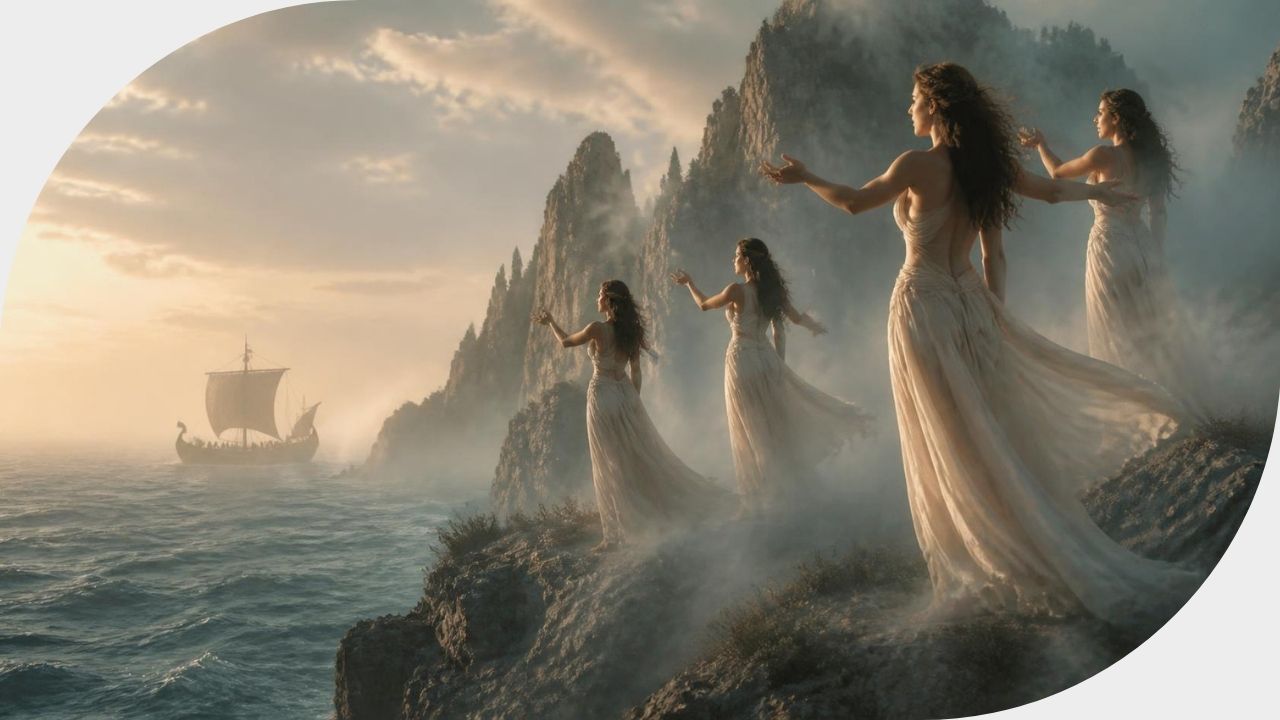
Few symbols in The Odyssey feel as relevant today as the Sirens.
They don't attack ships.
They don't force sailors off course.
They simply sing.
Their danger isn't violence.
It's distraction.
Every sailor believes they can listen without consequence.
Every sailor is wrong.
As I reflect on this passage today, I don't picture mythical creatures waiting on a distant island.
I picture smartphones.
Social media.
Endless notifications.
Constant emails.
The endless stream of content competing for our attention.
The greatest threats to our future rarely look dangerous.
They look entertaining.
5 minutes of scrolling becomes an hour.
One episode becomes an entire evening.
A quick distraction slowly becomes a habit.
Before long, we've spent years reacting to everyone else's priorities while neglecting our own.
One detail in Homer's story has always fascinated me.
Odysseus never relies on willpower alone.
Before reaching the Sirens, he instructs his crew to fill their ears with beeswax and tie him tightly to the mast.
He prepares before temptation appears.
There's profound wisdom in that.
The strongest people I know don't simply have more discipline.
They design environments that make good decisions easier.
Because protecting your attention isn't just about productivity.
It's about protecting your future identity.
The greatest threat to your future probably isn't failure. It's distraction. Guard your attention because what consistently captures your focus eventually shapes who you become.
6. The Lotus-Eaters, Circe & Calypso
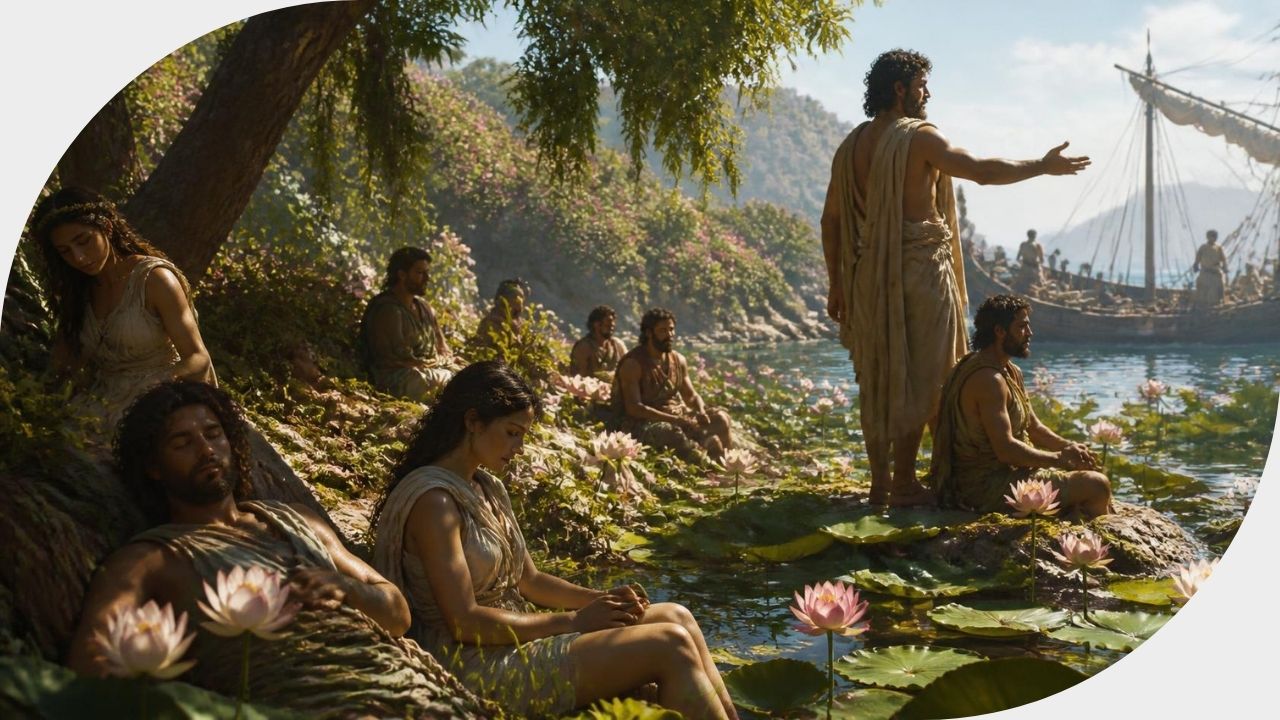
One of the most overlooked moments in The Odyssey happens long before the famous encounters with Circe and Calypso.
Odysseus' crew arrives on the island of the Lotus-Eaters.
The lotus flower doesn't poison them.
It doesn't make them violent.
It simply makes them forget.
They lose the desire to continue their journey.
They stop caring about home.
They become comfortable exactly where they are.
Odysseus has to drag them back to the ship.
Later, Circe and Calypso offer a different version of the same temptation.
Comfort.
Safety.
Pleasure.
An easier life.
Calypso even offers Odysseus immortality.
Imagine that.
No more storms.
No more uncertainty.
No more struggle.
Everything many people spend their lives chasing.
Yet he leaves.
Because he understands something many of us forget.
Comfort is not the same as fulfillment.
I've coached people who had successful careers, impressive salaries, and lives others envied.
Yet deep inside they knew they were living someone else's version of success.
The easier path isn't always the meaningful one.
Sometimes your greatest challenge isn't overcoming hardship.
It's walking away from a life that's comfortable but no longer aligned with your values.
Growth begins the moment comfort stops making your decisions for you.
Don't confuse comfort with fulfillment. A comfortable life can still leave you disconnected from who you're meant to become.
7. Scylla & Charybdis
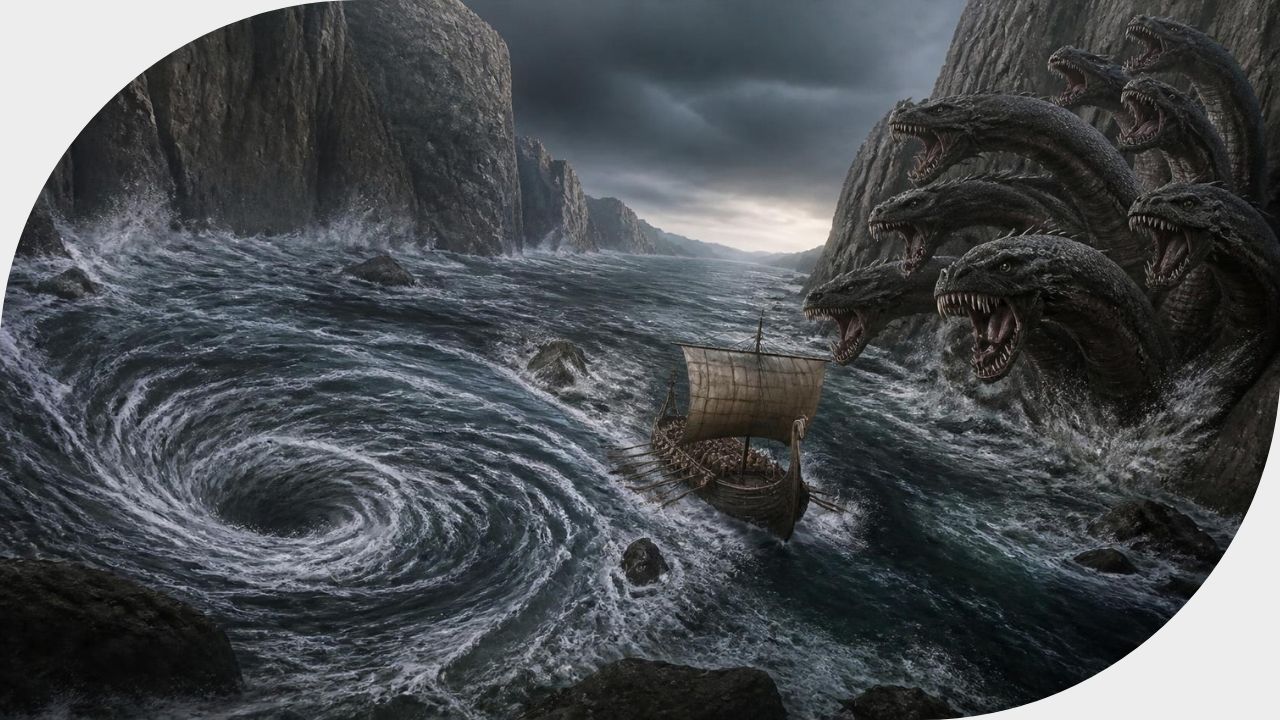
One of the most powerful moments in The Odyssey comes when Odysseus must sail between Scylla and Charybdis.
On one side waits a six-headed monster.
On the other, a massive whirlpool.
Neither option is good.
Both come with consequences.
As a younger reader, I kept searching for the perfect solution.
Surely there had to be another way.
There wasn't.
That's because Homer wasn't teaching strategy.
He was teaching wisdom.
Life rarely presents us with perfect choices.
Should you leave the stable job for meaningful work?
Should you end the relationship that no longer reflects your values?
Should you move to another city?
Should you prioritize ambition or family?
We often wait for complete certainty before making a decision.
But waiting can become the biggest risk of all.
Progress doesn't come from making perfect decisions.
It comes from making values-based decisions.
Sometimes courage means choosing the path that protects your future, even when it isn't the easiest one.
The perfect choice often doesn't exist. Wisdom is choosing the path that best aligns with your values, even when it comes with sacrifice.
8. Athena, The Beggar & The People of the Sea
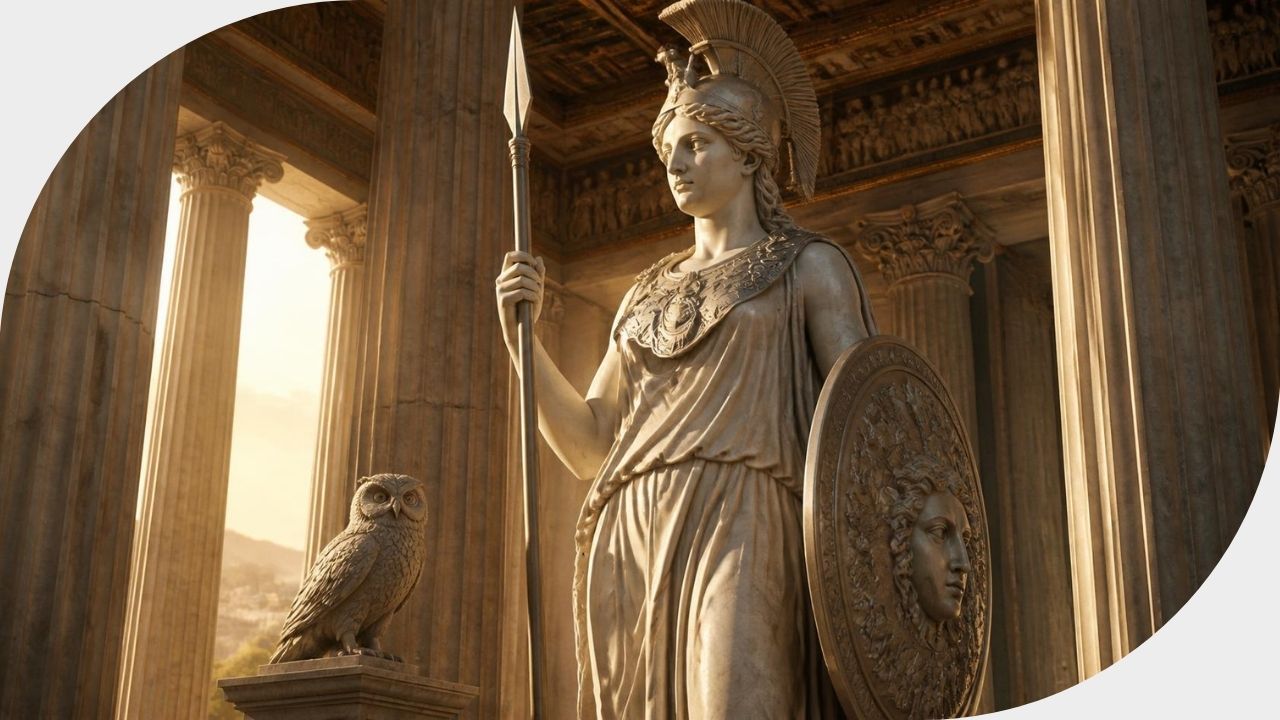
As Odysseus' journey nears its end, Homer and Christopher Nolan leave us with 3 powerful symbols that complete his transformation.
Athena represents wisdom.
She rarely removes obstacles.
Instead, she helps Odysseus navigate them.
Real wisdom doesn't eliminate life's challenges.
It helps us respond to them differently.
Then something unexpected happens.
After everything he's survived, Odysseus doesn't return home wearing armor or demanding recognition.
He returns disguised as a beggar.
The man who once sought glory now chooses humility.
He observes before acting.
He listens before speaking.
He no longer needs immediate validation because he knows who he is.
Christopher Nolan adds one final layer through the "People of the Sea."
Rather than portraying monsters, he reminds us that war can transform ordinary people into versions of themselves they barely recognize.
To me, that's one of the film's most profound messages.
The greatest battle isn't against mythical creatures.
It's against losing yourself.
Against allowing pain, success, fear, or ambition to reshape your character.
Odysseus doesn't become a hero because he defeats monsters.
He becomes a hero because he returns with greater wisdom, deeper humility, and a renewed commitment to his values.
That's what redemption looks like.
Your greatest victory isn't defeating the world. It's becoming someone you respect when no one else is watching.
The Real Monsters Were Never Mythical
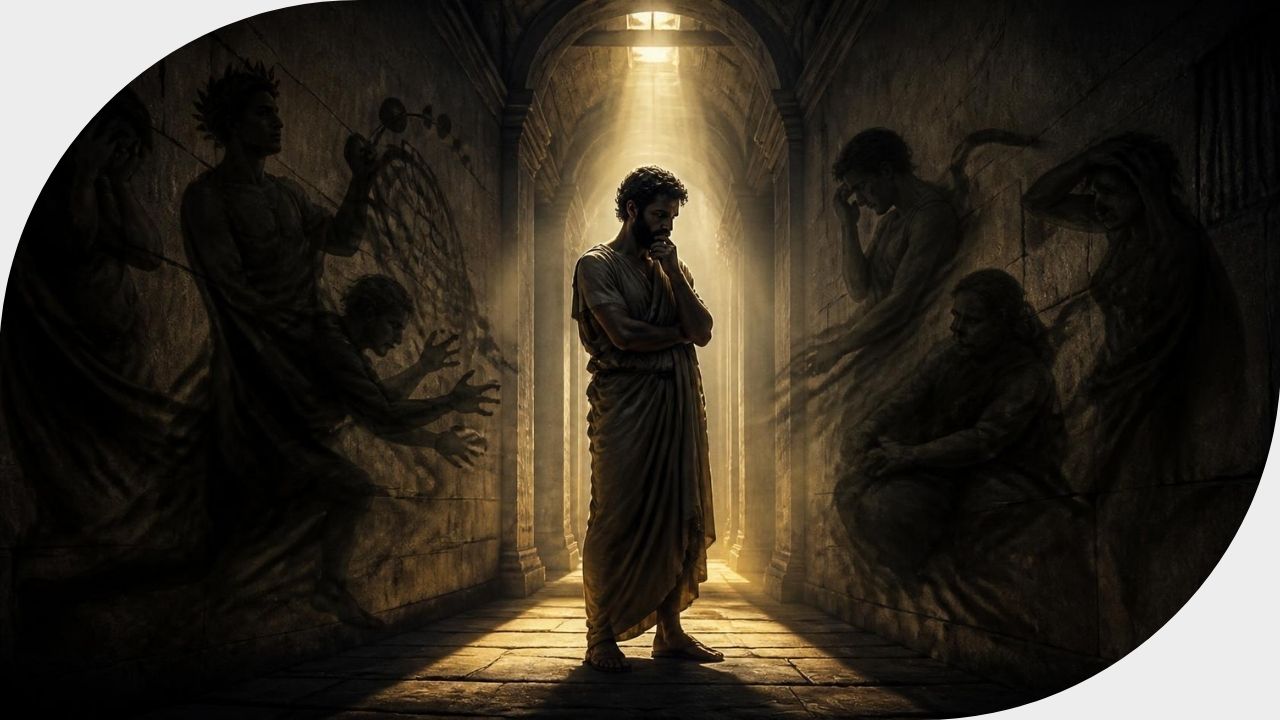
The more I reflect on The Odyssey, the more convinced I become that Homer wasn't writing about monsters.
He was writing about us.
The monsters simply gave shape to the battles taking place within every human being.
Thousands of years later, those monsters still exist.
They've simply changed their appearance.
- The Sirens have become endless distractions competing for your attention.
- The Lotus Flower has become the comfort that keeps you from growing.
- The Cyclops has become the ego that constantly seeks recognition.
- The Sea has become life's uncertainty.
- The Suitors have become limiting beliefs that slowly occupy your mind when you stop protecting it.
- Athena has become your conscience.
- Ithaca has become the life that reflects your values and authentic identity.
The greatest battle you'll ever fight isn't against the world around you.
It's against the parts of yourself that pull you away from the person you want to become.
Coming Home to Yourself
When I look back on my own identity crisis, I no longer see it as something that went wrong.
I see it as the beginning of my journey home.
It forced me to redefine success.
It challenged me to identify the values I wanted to live by.
It taught me that achievement without alignment always feels incomplete.
That's why The Odyssey continues to inspire me after all these years.
Not because it's about ancient Greece.
Not because it's filled with unforgettable adventures.
But because it reminds us that every meaningful journey is ultimately an inward one.
Perhaps that's where you find yourself today.
Maybe you're questioning your career.
Maybe you're feeling disconnected despite outward success.
Maybe you've accomplished everything you thought you wanted, only to realize you're still searching for something deeper.
If that's you, I'd encourage you to pause and ask yourself one simple question:
Am I living according to my values, or according to everyone else's expectations?
Your answer might change the direction of your life.
Because clarity doesn't begin when life changes.
It begins when you understand who you are.
Your Journey Starts Here
If this resonated with you, perhaps you're standing at your own crossroads.
You don't have to navigate that journey alone.
If you're looking for greater clarity, stronger confidence, or a life that's more aligned with your values and authentic identity, I'd be honored to support you.
I offer a complimentary 15-minute Clarity Call, where we'll explore where you are, what's keeping you stuck, and what your own journey home could look like.
Sometimes one conversation is all it takes to see yourself and your future with greater clarity.

Final Thoughts
When I first read The Odyssey in college, I admired Odysseus because he was a hero.
Today, I admire him because he was human.
He questioned himself.
He wrestled with guilt.
He struggled with temptation.
He let his ego get the better of him.
He made mistakes.
And despite all of that, he kept moving toward home.
Maybe that's why Homer's epic has endured for nearly 3,000 years.
Not because it's a story about ancient myths.
But because it's a story about every one of us.
A story about losing ourselves.
A story about remembering our values.
A story about choosing purpose over comfort, humility over ego, and authenticity over approval.
A story that reminds us that no matter how far we've wandered...
The greatest journey you'll ever take isn't across the sea.
It's the one that leads you back to yourself.
Got Questions?
I'd love to hear from you! Ask away, and let’s explore the answers together.

