
THE INVISIBLE LENS THAT'S RUNNING YOUR LIFE
Jan 18, 2026
Why your mind may be distorting your life without you realizing it
You know that moment when you close your laptop after a long day… and your body finally exhales… but your mind doesn’t?
You’re standing in the kitchen.
Staring at nothing.
Yet your brain is still in the meeting.
Replaying a sentence you said.
Rewriting a sentence you didn’t.
Imagining how it landed.
Assuming what they meant.
Forecasting what happens next.
And the wild part is… nothing is happening right now.
No one is speaking to you.
No one is judging you.
No one is rejecting you.
But inside, it feels like your worth is still on the table.
If I had to guess, your life has a pattern like this:
- You’re capable. People rely on you. You deliver.
- You’re successful enough that no one would suspect you struggle internally.
- Yet the moment you slow down, a quiet pressure rises.
- Not always panic. More like tension. A mental tightness.
- Like you’re one misstep away from being exposed.
This isn’t a personality flaw.
It’s perception.
Not perception as in “positive thinking.”
Perception as in the invisible lens your mind uses to decide what things mean.
And if you don’t train that lens, it trains you.
In this article, I’m going to show you how perception shapes your reality, why high performers are especially vulnerable to distorted self-evaluation, and how to rewire your mind in three grounded steps.
Reality Is Not What Happens. It’s What Your Mind Selects

Imagine standing in Times Square.
Lights. Screens. Traffic. Voices. Sirens. Smells. Movement.
Your senses are flooded.
Now imagine your brain tried to consciously process all of it.
You’d freeze.
So your mind does something brilliant.
It filters.
At any moment, you’re receiving roughly 2 million bits of information per second.
Consciously, you register around 126 bits.
So your brain uses 3 automatic shortcuts:
- Deletion: it removes most of what’s there
- Distortion: it reshapes what remains
- Generalization: it makes rules from past experiences
This isn’t a bug. It’s the system.
But here’s what most people miss:
You don’t live inside reality.
You live inside your filtered interpretation of reality.
That’s why two people can walk out of the same meeting and experience two completely different worlds.
Why One Email Can Ruin Your Mood (And Another Person Shrugs It Off)

Let’s make this painfully specific.
You get a short message from your manager:
“Can you stop by later?”
That’s it. No emoji. No context. No warmth.
Now watch what your mind does in 0.3 seconds:
- “Did I mess up?”
- “Are they unhappy with me?”
- “What did I do?”
- “Am I about to get feedback I don’t want?”
Your nervous system reacts as if something is wrong.
But the truth is, the email is neutral.
The emotional reaction isn’t coming from the email.
It’s coming from the meaning your mind attached to it.
This is where your unconscious programming steps in.
The Unseen Code Running Your Mind

In NLP, we call these filters Meta Programs.
I like to call them the “default settings” of your mind.
They’re shaped by:
- the emotional experiences you had early in life
- the environments that rewarded certain behaviors
- the moments you felt embarrassed, rejected, or unseen
- the language you heard repeatedly about success and worth
- the decisions you made when you were trying to feel safe
Over time, these programs become predictable.
They decide:
- what you focus on
- what you ignore
- what you assume
- what you fear
- what you think you have to prove
And because they operate under the surface, you don’t experience them as “programs.”
You experience them as reality.
That’s the trap.
The Hidden Mind Block Behind Self-Doubt
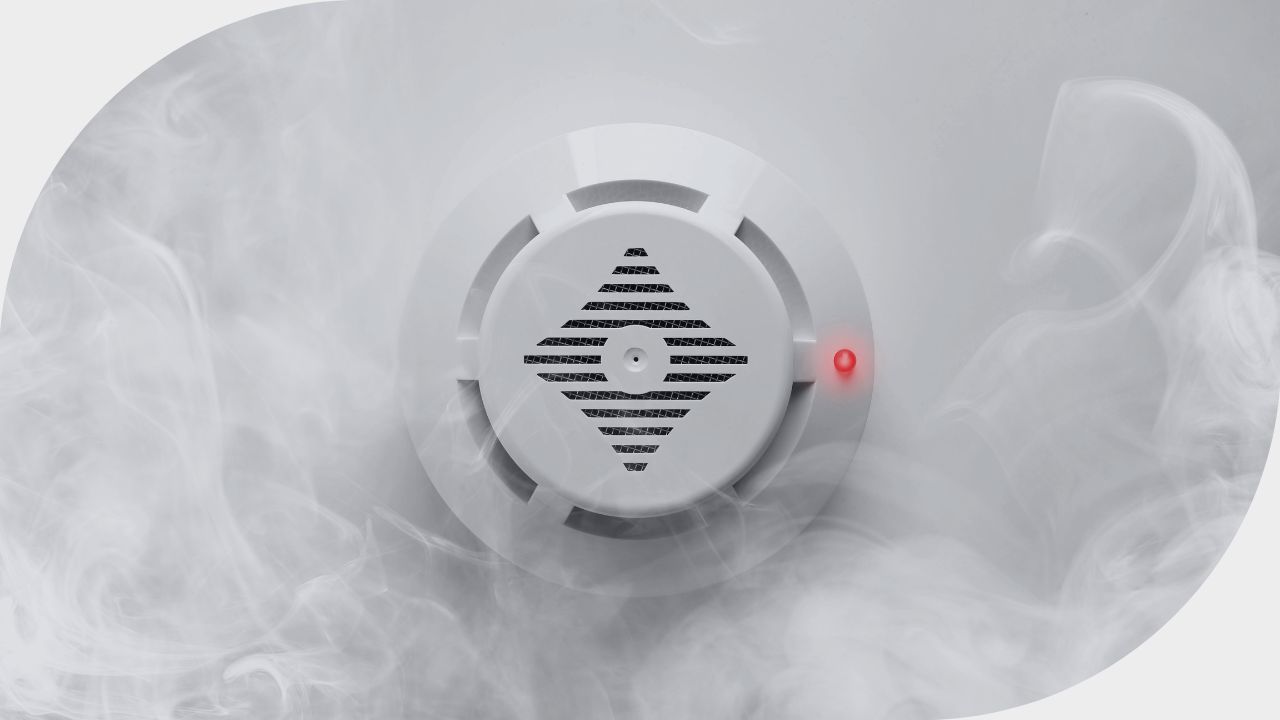
The mind block I see most often in high performers is distorted self-evaluation.
It’s not a lack of confidence.
It’s not a lack of ambition.
It’s the tendency to interpret normal human moments as evidence of not being enough.
It shows up as:
- rewriting emails in your head before sending them
- over-preparing for conversations that don’t require that much prep
- feeling uneasy when things are going well, waiting for a drop
- needing more validation than you want to admit
- hearing feedback and immediately scanning for what you did wrong
Here’s a metaphor I use with clients:
Your mind becomes like a smoke detector that’s too sensitive.
It’s designed to keep you safe.
But it goes off when you make toast.
It turns neutral moments into alarms.
And when you live in that state long enough, your entire life starts to feel urgent.
What Happens When Your Mind Stays Untrained

An untrained mind defaults to protection.
Protection can look productive on the outside:
- working harder
- planning more
- controlling details
- staying “on top of things”
But internally, it feels like:
- overthinking instead of clarity
- busyness instead of effectiveness
- anxiety without a known reason
- a constant sense of being behind
You start living as if life is a performance review.
Not because life is harsh.
Because your mind has been trained to perceive it that way.
The Pattern I Couldn’t Outrun

By 2019, I had lived across 3 continents and 10 cities.
On the surface, it looked like curiosity and growth.
Underneath, there was a pattern I hadn’t named yet.
Whenever I felt unsettled, I looked outward for relief.
A new city promised a fresh start.
A new job promised renewed motivation.
A new date promised excitement and connection.
Each change brought a temporary sense of happiness.
And then the same internal tension returned.
I wasn’t moving for adventure alone.
I was chasing happiness.
What I didn’t see at the time was that this had become a learned pattern.
My mind had been trained to associate happiness with external change.
So when discomfort showed up, I didn’t question my perception.
I changed my environment.
It didn’t matter where I lived or what I did.
The feeling followed me.
Later in 2019, during my first NLP training, the pattern became clear.
Outdated mental programs were shaping how I interpreted my life, quietly reinforcing the belief that happiness existed somewhere else. Somewhere next.
Once I understood how perception worked, I finally had leverage.
Not instantly.
But intentionally.
The 3-Step Framework to Rewire Perception

This isn’t a motivation technique.
It’s a training process.
Simple in structure.
Subtle in practice.
Lasting in effect.
Step 1: Unlearn
Change begins with awareness.
You can’t unlearn a pattern you can’t see.
Most stress doesn’t come from what happens.
It comes from how your mind interprets what happens.
Start noticing:
- what your mind assumes when something is unclear
- what you interpret as rejection
- what you label as failure
- what you take personally that might not be personal
Unlearning means noticing the moment interpretation kicks in.
Here’s a practical example:
The next time your stress spikes, ask:
“What story did my mind just tell me?”
Not what happened.
What story.
Because the story is what creates the emotion.
If you want structure here, my Self-Awareness Toolkit includes 9 Self-Discovery Resources designed to help you observe your patterns without judgment, so perception starts to soften on its own.

Step 2: Relearn
Awareness opens the door.
Repetition rewires the brain.
Your unconscious mind learns through:
- emotional intensity
- repetition
- consistency
Not through logic.
That’s why one powerful realization doesn’t create lasting change.
Relearning means choosing steadier interpretations again and again.
For example, instead of repeating:
“I am always confident.”
Try:
“I can handle discomfort and still show up clearly.”
This trains stability.
Not fantasy.
Step 3: Evolve
As your perception shifts, behavior changes without force.
Not because you push harder.
But because resistance fades.
You stop proving.
You stop performing.
You start responding from authenticity.
This is BE YOU FOR YOU in practice.
Evolution isn’t about becoming someone new.
It’s about removing the distortions that pulled you away from who you already are.
Why Mindset Work Can’t Be Outsourced

You can delegate tasks.
You can hire expertise.
But perception shifts only through participation.
No one can retrain your nervous system for you.
And that’s where your power is.
With consistent practice, most people experience meaningful internal shifts within 3 to 6 months.
Not because time heals.
Because awareness trains.
If This Sparked Something, Sit With It

You don’t need to take action immediately.
Perception doesn’t shift through pressure.
It shifts through attention.
If you saw yourself in any part of this, that matters.
Here are a few gentle ways to continue:
- Re-read the sections that made you feel exposed or relieved
- Watch what your mind does in the next stressful moment
- Pause and ask: “What interpretation did I just make?”
You’re welcome to follow along, reflect quietly, or reach out when it feels right.
Clarity doesn’t arrive through force.
It arrives when you create space for it.
Reflection Question to Leave You With
What if the situation you’re struggling with isn’t the problem…
but the way your mind has learned to interpret it?
Sit with that question.
Your answer will show up in its own time.
Got Questions?
I'd love to hear from you! Ask away, and let’s explore the answers together.

